
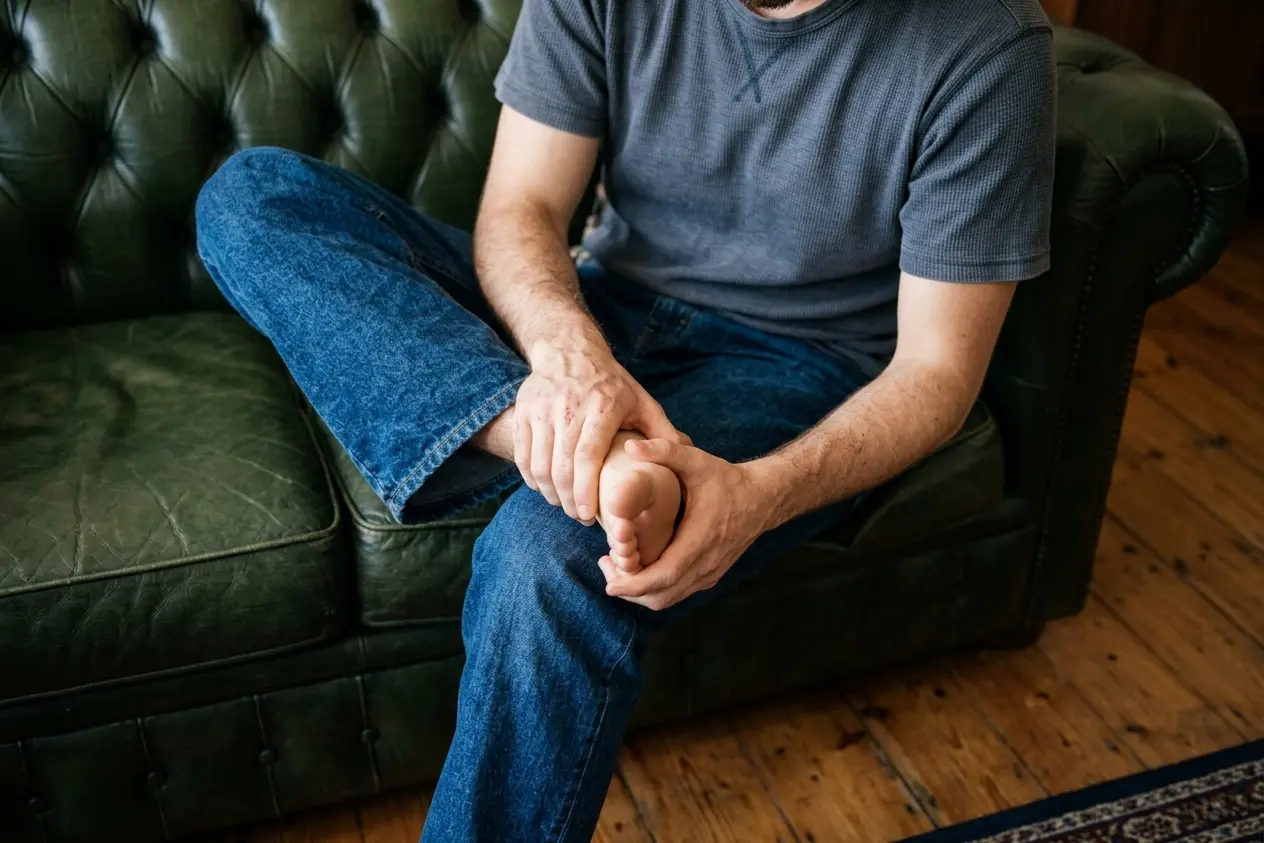
You settle into bed, ready to rest, but a burning or prickling sensation in your feet makes it difficult to get comfortable. You move your feet out from under the covers, change positions, and wait for the discomfort to ease.
Burning feet at night can interrupt more than your sleep. It can leave you tired the next day and concerned about what is causing the problem. One possible explanation is peripheral neuropathy, but other conditions can produce similar symptoms.
At Carolina Rehab and Physical Medicine Center in Little River, SC, Dr. Craig Strickland and our team help patients understand their symptoms and explore care suited to their needs. Finding out why your feet are burning is the first step.
Could Burning Feet at Night Be Neuropathy?
Peripheral nerves branch out from the brain and spinal cord and extend throughout the body. They allow you to feel sensations such as touch, temperature, and pain, and help control muscle movement.
Damage to these nerves is called peripheral neuropathy. When it affects the feet, it can cause burning, tingling, pain, or numbness. Your feet may feel hot even when the skin is not warm to the touch.
Other symptoms may include:
- A pins-and-needles sensation.
- Sensitivity to light touch, including bedsheets.
- Difficulty feeling temperature changes.
- Weakness or problems with balance.
The National Institute of Diabetes and Digestive and Kidney Diseases notes that peripheral neuropathy symptoms are often worse at night. Symptoms frequently affect both feet, although the pattern can vary.
Diabetes is a common cause, but having burning feet does not automatically mean you have diabetes. Vitamin deficiencies, certain medications, kidney or thyroid conditions, and injuries or pressure on nerves can also contribute to neuropathy. Sometimes, the cause remains unclear even after testing.
Could Pressure on a Nerve Be Involved?
Burning in the feet can also occur when a nerve is compressed or irritated. For example, pressure on a nerve in the lower back may cause symptoms that travel down the leg into the foot. A nerve compressed near the ankle can also cause burning or tingling.
The location of your symptoms, whether they affect one foot or both, and any accompanying back pain can help guide an evaluation. If the findings suggest a condition that requires care outside our practice, we can recommend an appropriate medical evaluation.
How We Approach the Problem at Carolina Rehab
When you come to us with burning feet at night, we want to understand how the problem is affecting you. Is it keeping you awake? Have you started cutting walks short, avoiding golf, or feeling less steady when playing with your grandchildren?
We begin by reviewing your symptoms and medical history, including when the burning started and whether you have noticed numbness or weakness. Depending on the findings, bloodwork, nerve testing, or an evaluation by another medical provider may be needed to identify an underlying cause.
For patients whose needs fit our services, our neuropathy care in Little River offers non-invasive options tailored to the individual. Your care plan may include:
- Gentle nerve stimulation as part of a personalized approach to managing neuropathy symptoms.
- Therapeutic laser treatments when appropriate for your condition.
- Nutritional support and lifestyle guidance to address factors that may affect nerve health.
- Customized chiropractic care when an evaluation identifies problems that may benefit from it.
We develop your care plan around your condition, medical history, and goals. Addressing an underlying condition, such as diabetes or a vitamin deficiency, is also an important part of managing neuropathy.
Our focus is on helping you feel more comfortable and function better, whether your goal is walking on the beach, returning to the golf course, or spending time with family.
What Can You Do While Waiting for an Evaluation?
A few precautions can help protect your feet:
- Check them daily. Look for blisters, cuts, redness, or sores, especially if you have reduced feeling.
- Wear comfortable, well-fitting shoes. Protect your feet from rubbing and unnoticed injuries.
- Avoid heating pads and hot-water bottles. Reduced sensation can make it difficult to recognize a burn.
- Write down your symptoms. Note when the burning starts, where you feel it, and what makes it better or worse.
These steps can help protect your feet, but they do not replace finding the cause.
When Should You Seek Medical Attention?
Arrange an appointment if burning feet keep returning, disturb your sleep, become more painful, or occur with numbness or changes in balance. You do not need to wait until walking becomes difficult to have the problem evaluated.
Seek immediate medical care if the burning begins suddenly, particularly after possible exposure to a toxic substance, or if you have a foot wound that appears infected, especially if you have diabetes. These situations should not wait for a routine consultation.
Let Us Help You Understand What Is Happening
If burning feet at night are keeping you awake or interfering with activities you enjoy, we can help you explore whether neuropathy may be involved and whether our services are appropriate for you.
Call Carolina Rehab and Physical Medicine Center at 843-249-9787 to arrange a consultation with Dr. Strickland and our team in Little River.