

Urinary leakage, also called urinary incontinence or bladder incontinence, can be frustrating, embarrassing, and disruptive to everyday life. Many people begin avoiding exercise, travel, social activities, or even a good night’s sleep because they are worried about accidents or urgency. While urinary incontinence is common, especially with age, after childbirth, or following certain medical conditions, that does not mean you have to simply live with it.
Dr. Strickland is excited to bring to Carolina Rehab and Physical Medicine Center a pelvic floor chair because it offers patients a new way to address urinary incontinence and pelvic floor weakness without surgery, medication, or downtime. This advanced treatment uses electromagnetic stimulation to strengthen the muscles that support the bladder, helping patients regain better control and greater confidence.
Research shows that urinary incontinence affects millions of Americans. According to the National Association for Continence, more than 25 million adults in the United States experience some form of bladder leakage, including approximately one in four women over age 18 and many men as well. Leakage is especially common after childbirth, during menopause, and after prostate-related conditions or procedures in men.
Even though the condition is common, many people never seek treatment because they feel embarrassed or assume it is simply a normal part of getting older. In reality, bladder leakage is often related to weakened pelvic floor muscles—and in many cases, those muscles can be strengthened.
Why Pelvic Floor Weakness Causes Bladder Problems
The pelvic floor is a group of muscles that supports the bladder, bowel, and other pelvic organs. When these muscles become weak, they may no longer provide enough support for the bladder. This can lead to:
- Leaking when you cough, laugh, sneeze, or exercise
- A sudden urge to urinate
- Frequent trips to the bathroom
- Difficulty making it to the restroom in time
- Loss of confidence in daily activities
Pelvic floor weakness can affect both women and men. These muscles may weaken because of pregnancy and childbirth, aging, menopause, chronic coughing, repeated heavy lifting, excess weight, constipation, or simply because the muscles have not been used effectively over time. Men may also experience pelvic floor weakness after prostate-related issues or procedures.
Women may notice symptoms after pregnancy, childbirth, menopause, or aging. Men may experience pelvic floor weakness as they age or after prostate-related issues.
Why Non-Surgical Treatment Is Usually Recommended First
For most people with mild to moderate urinary incontinence, doctors usually recommend conservative treatment before considering medications or surgery. This often includes pelvic floor exercises, physical therapy, lifestyle changes, and other non-invasive approaches. Surgery is generally reserved for more severe cases or for people who have not improved with other treatments.
That is one reason many patients are interested in a non-surgical urinary incontinence treatment like the pelvic floor chair. It offers a way to strengthen the muscles responsible for bladder control without needles, medications, or recovery time.
What Is A Pelvic Floor Chair?
A pelvic floor chair is a modern pelvic floor treatment system that uses therapeutic electromagnetic stimulation to activate the pelvic floor muscles. During a single 20-minute appointment, the system creates approximately 11,200 powerful muscle contractions—similar to performing thousands of Kegel exercises in one session.
Unlike traditional exercises, Uthe pelvic floor chair reaches deeper muscles that are often difficult to activate on your own. This helps retrain and strengthen the muscles responsible for bladder control.
Because it is completely non-invasive, the pelvic floor chair is an appealing option for people who want a non-surgical urinary incontinence treatment without the risks or recovery time associated with surgery.
How A Pelvic Floor Chair Works Treatment Works
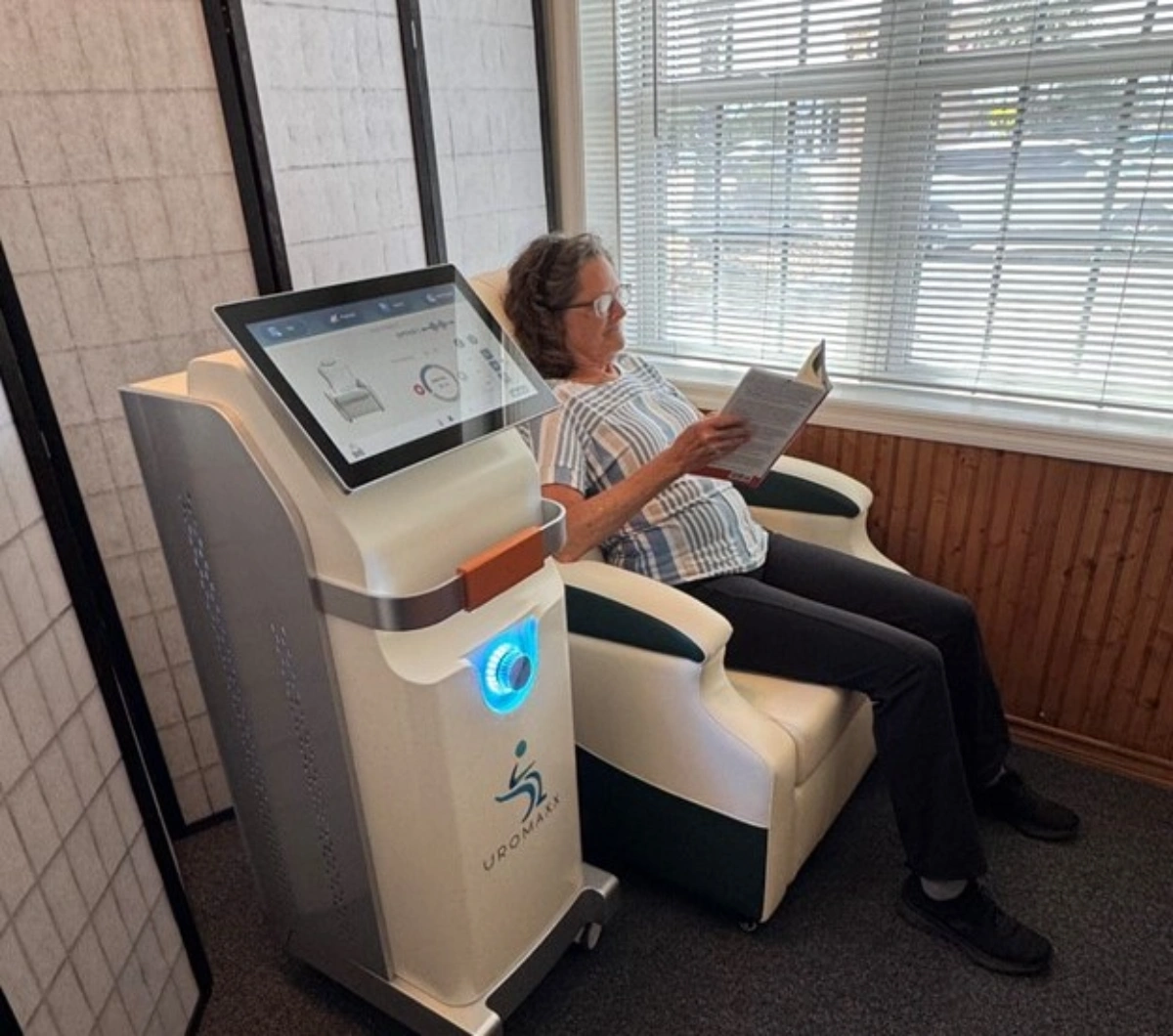
During treatment, you remain fully clothed and sit comfortably in the specialized pelvic floor chair. The device sends gentle electromagnetic energy into the pelvic region, causing the muscles to contract and relax rapidly.
You may feel a pulsing or tightening sensation during the session, but it should not be painful. The intensity can be adjusted to match your comfort level.
Each appointment lasts about 20 minutes. Afterward, you can immediately return to your regular activities, including work, errands, or exercise.
What Makes a Pelvic Floor Chair Different from Kegel Exercises?
Many people are told to do Kegel exercises to strengthen their pelvic floor. While Kegels can help, they are often difficult to do correctly and consistently. Some people are not sure whether they are even exercising the right muscles.
Our pelvic floor chair offers a more intensive and precise approach. Instead of doing a few Kegels each day, one treatment session creates thousands of targeted contractions. These “super contractions” can help wake up underactive muscles and improve neuromuscular control more effectively.
For many patients, the pelvic floor chair becomes an excellent complement to a home pelvic floor exercise program.
Who May Benefit from This Non-Surgical Urinary Incontinence Treatment?
The pelvic floor chair may be helpful for adults who experience:
- Stress incontinence, such as leaking during exercise or sneezing
- Urgency or frequent urination
- Mild to moderate bladder leakage
- Pelvic floor weakness after pregnancy
- Changes related to aging or menopause
- Loss of bladder control after prostate issues
In addition to helping with urinary control, stronger pelvic floor muscles may also support intimate wellness. Improved blood flow and muscle tone may help women with vaginal tone and may help men with erectile function and ejaculation control.
How Many Pelvic Floor Sessions Are Needed?
Some people notice improvement after the first visit, but the doctor generally recommends a series of treatments for the best results.
Appointments are usually scheduled twice per week to allow the muscles to strengthen consistently over time. Because the treatment is comfortable and does not require recovery, it is easy to fit into a busy schedule.
You Do Not Have to Live with Urinary Leakage
Many people feel embarrassed to talk about bladder leakage, urinary incontinence, or bladder incontinence, but these conditions are more common than most people realize. The good news is that effective treatment is available.
If you are looking for a non-surgical urinary incontinence treatment, our pelvic floor chair may help you regain better bladder control, improve pelvic floor strength, and feel more confident in your daily life.
Carolina Rehab and Physical Medicine Center is proud to offer this advanced treatment to help patients in Little River, South Carolina, and surrounding areas take the next step toward better health and confidence. Schedule your consultation today to learn whether pelvic floor treatment is right for you.